
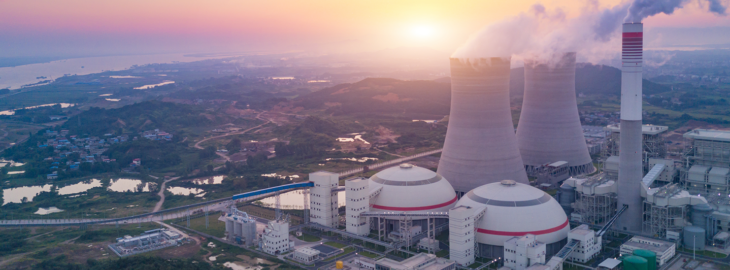
Steam power plants convert thermal energy into electrical power through a continuous water-steam cycle. Water is pressurized and heated to produce steam, the steam expands through a turbine to generate mechanical shaft power, and the generator converts that mechanical power into electricity. After leaving the turbine, the steam is condensed and returned to the cycle.
Reliable operation depends on more than the steam turbine and generator alone. Pumps maintain the circulation of water and other fluids throughout the plant, while fans can support combustion air, draft, cooling, and ventilation, depending on the plant design. Together with other supporting rotating equipment, these assets maintain the conditions required for stable power generation.
This creates two different monitoring requirements. Critical turbine and generator equipment requires monitoring appropriate to its criticality and protection strategy, while a broader population of supporting rotating assets also needs sufficient condition visibility to maintain reliable plant operation.
The challenge: maintaining visibility across supporting systems
Steam power plants contain rotating equipment across the steam-water cycle and its supporting systems. The number and type of assets vary with fuel, boiler design, cooling configuration, emissions-control requirements, and overall plant layout.
Operating conditions also vary. Plant load, flow, pressure, speed, and operating state can influence machine behavior, particularly during startup, shutdown, or changes in generation output. A change in vibration therefore does not automatically indicate mechanical degradation.
The main monitoring challenge is coverage. Critical generation equipment may already receive continuous monitoring and dedicated protection, while supporting assets can depend more heavily on periodic vibration routes and local inspections.
With many machines distributed throughout the facility, increasing measurement frequency manually also increases workload and demand for specialist capacity. Developing mechanical changes can therefore progress between inspections even though the affected machine supports an important plant function.
Why vibration monitoring matters in steam power generation
Many relevant mechanical problems in rotating equipment develop progressively. Bearing degradation, imbalance, misalignment, mechanical looseness, coupling problems, and other changes can influence vibration behavior before they result in functional failure.
These changes matter because steam power generation depends on the combined reliability of primary and supporting equipment. Pumps maintain the circulation and transfer of fluids throughout the steam-water cycle and auxiliary systems. Depending on the plant configuration, fans can support the airflow, draft, cooling, and ventilation required for stable operation. Mechanical deterioration in these supporting assets can reduce capacity, redundancy, or system availability.
The generator has a different role because it forms part of the primary generation equipment. Its mechanical condition is directly related to electricity production, but its monitoring requirements must reflect its criticality and existing protection strategy.
Vibration measurements should therefore be interpreted together with operating information such as speed, load, flow, pressure, and operating state. Continuous trending provides the historical context needed to identify persistent changes and determine where further diagnostic analysis or maintenance is required.
Applying VibSys® in steam power generation
VibSys® is designed for continuous vibration condition monitoring across rotating equipment, with a strong fit for supporting and balance-of-plant machinery that sits between periodic inspection routes and high-end critical-machine monitoring systems.
For steam power plants, this includes pumps, fans, and other supporting rotating assets distributed across water, cooling, draft, ventilation, and auxiliary systems. VibSys® continuously acquires high-quality vibration and supporting machine data and processes this information locally. Detailed vibration data remains available when changing trends require further diagnostic analysis.
This provides a practical way to extend continuous monitoring beyond the most critical generation equipment. Instead of increasing monitoring coverage through additional manual measurement work, condition data can be collected continuously while specialist attention is directed toward machines that show relevant changes.
The scalable architecture allows monitoring to begin with a defined group of rotating assets and expand across additional plant systems as requirements grow. Open connectivity also allows machine-condition information and vibration data to be incorporated into existing plant and analysis environments.
VibSys® is intended for condition monitoring and diagnostics to support maintenance decision-making. It does not replace dedicated turbine or generator protection, safety-related shutdown systems, or other machinery protection functions.

Key advantages for steam power generation
- Continuous vibration condition monitoring across supporting rotating equipment
- Increased monitoring coverage beyond the most critical generation equipment
- Earlier visibility into developing mechanical degradation
- High-quality vibration data for trending and diagnostic analysis
- Local processing close to the monitored equipment
- Scalable deployment across additional plant systems and asset groups
- Open connectivity with existing plant and analysis environments
- Reduced dependency on manual vibration measurement routes
- More efficient use of vibration and reliability expertise
- A practical foundation for condition-based and predictive maintenance
Impact on maintenance and plant reliability
Continuous vibration condition monitoring gives maintenance teams greater visibility into the condition of supporting equipment throughout the steam power plant.
Developing mechanical changes can be identified earlier, allowing teams to investigate and plan interventions before deterioration leads to a larger mechanical problem or loss of supporting-system availability. Condition trends also improve prioritization by directing specialist attention toward assets that show meaningful changes.
This broader visibility complements the monitoring and protection strategies already applied to critical turbine and generator equipment. It helps maintenance teams manage the larger population of supporting rotating assets that collectively contribute to reliable power generation.
From periodic measurements to scalable condition monitoring
Steam power plants can contain many pumps, fans, and other supporting rotating assets in addition to critical turbine and generator equipment. Covering this wider population with frequent manual vibration measurements requires substantial time and specialist capacity.
Continuous monitoring provides a more scalable approach. Machine-condition data can be acquired consistently without requiring someone to be present for every measurement. Reliability specialists can then spend more time interpreting relevant changes, performing diagnostics, and determining appropriate maintenance actions.
Monitoring does not need to cover the entire plant from the beginning. A scalable approach allows continuous monitoring to start with selected asset groups and expand across additional systems as the monitoring strategy develops.
Increase monitoring coverage with VibSys®
Effective condition monitoring in steam power generation is not simply about collecting more vibration data. It is about extending reliable machine-condition visibility to supporting assets that may not justify a traditional high-end monitoring system but remain important to plant availability.
VibSys® provides a scalable foundation for expanding that visibility. Continuous vibration acquisition, local processing, high-quality diagnostic data, and open connectivity make it possible to monitor more rotating equipment without creating an equivalent increase in manual measurement work.
Monitoring can start with a defined group of supporting assets where continuous insight can improve maintenance decisions and then expand across additional systems as requirements grow.
This enables maintenance and reliability teams to extend continuous monitoring across pumps, fans, and other supporting rotating equipment, while complementing the dedicated monitoring and protection strategies used for generators, steam turbines, and other critical generation equipment. The result is broader condition visibility and more focused use of specialist expertise across the plant.
